

Dog Boarding With Medication: How to Choose the Right Service
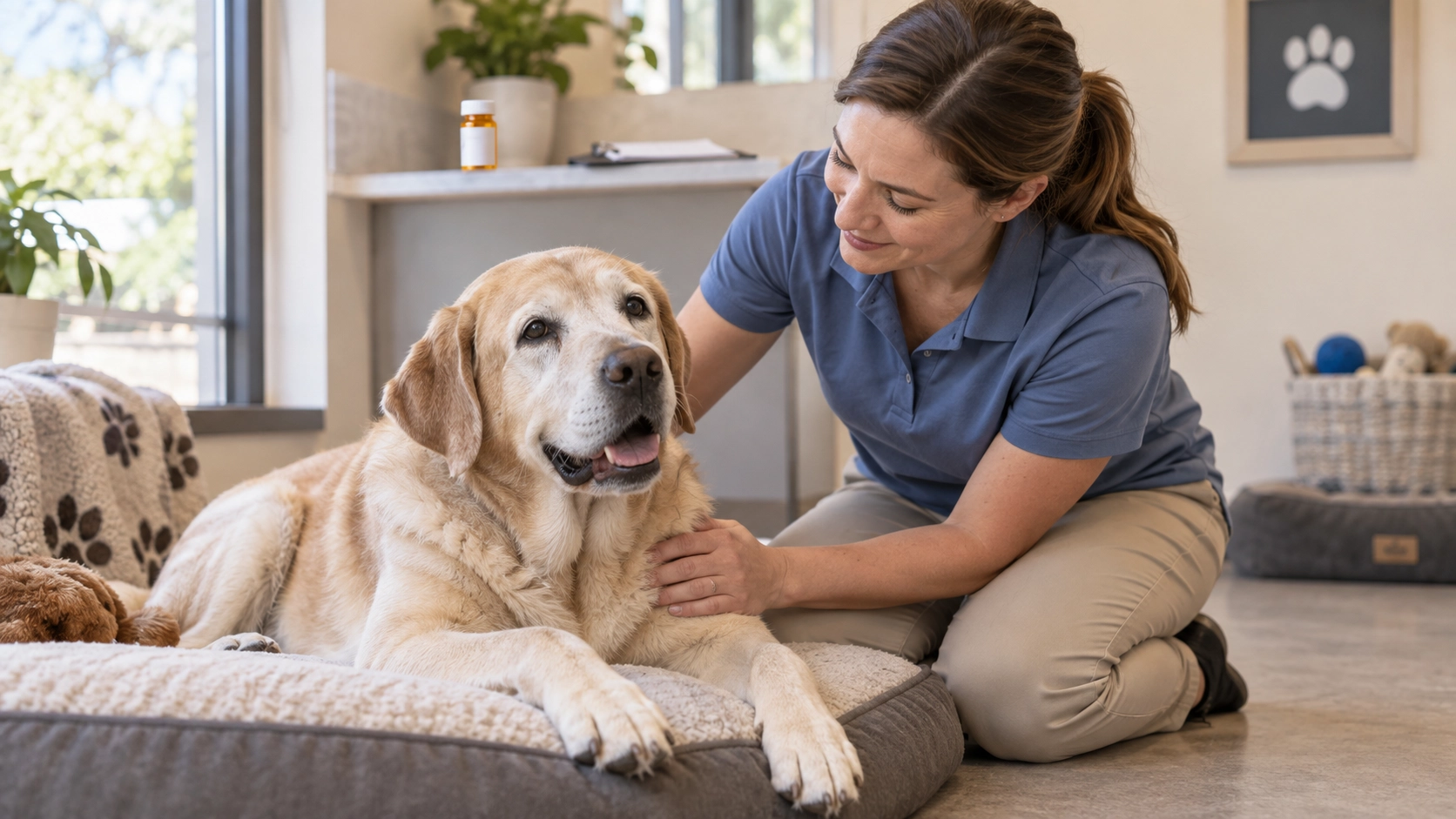

If your dog takes daily medication or needs special care, booking boarding takes a little more homework than dropping off a healthy, easygoing pet. Not every facility is set up to give a twice-daily pill or watch a dog through a post-surgery recovery, and a place that's wonderful for a young, healthy dog may not be the right fit for yours.
The goal is simple. Confirm that a provider can safely meet your dog's specific needs before you book, not after you've dropped them off. That means looking closely at how they handle medication, how experienced the staff are, what veterinary and emergency plans they have, how they accommodate individual needs, and how well they'll keep you in the loop. This guide walks through each of those, with questions to ask, preparation steps, and a checklist to take with you.
Dog boarding with medication administration is common and manageable, as long as you match your dog to a provider truly equipped for the job.
What Should I Look for in a Boarding Service for a Dog With Special Care Needs?
A handful of things separate a facility that can handle a medically complex or special-needs dog from one that simply says yes and hopes for the best. Weigh these before you commit.
Experience With Medication Administration
Start with the medication itself, since it's the most common special need and the easiest to get wrong. Ask whether staff are trained and experienced in giving medications, and whether they can handle your dog's specific type, whether that's a pill, a liquid, a topical, or something like an injection. Not every facility does injections or complicated regimens.
Can dog boarding facilities give dogs medication? Many can, but it isn't a given, so never assume. Ask how they document and track each dose so nothing gets missed or doubled, and whether medication administration is included in the boarding fee or costs extra. Find out what they do if your dog refuses a dose. A provider who has clear answers to all of that has done this before.
Staff Availability and Supervision
Medication is only as reliable as the people on hand to give it. Ask how often dogs are checked on through the day, and whether anyone is present overnight, since a dog on a bedtime or middle-of-the-night dose needs someone there to give it.
Find out who's responsible for medications specifically, rather than assuming it falls to whoever is nearby, and whether a dog who needs extra attention gets a designated caregiver. The staff-to-dog ratio tells you a lot here, because a skeleton crew watching a full house can't give a special-needs dog the attention they need.
Veterinary and Emergency Care
Even a well-run stay can hit a medical bump, so ask what happens if your dog gets sick or hurt. A prepared facility has a plan, not an improvisation. Find out whether they have a working relationship with a nearby vet or an emergency animal hospital, and what authorization they need from you to seek emergency treatment. Ask how fast they'll reach you if something seems off.
One thing to keep in mind. Good boarding staff aren't there to diagnose or treat your dog, and you don't want them to be. Their job is to follow your and your vet's instructions to the letter and to get your dog to a professional quickly when something's wrong. A provider who understands that line, and stays on the right side of it, is one you can trust.
What Special Care Can a Dog Boarding Service Provide?
Special care covers a lot more than pills. Depending on the provider, boarding can accommodate a range of needs, including:
- Medication schedules and special diets or feeding routines
- Frequent bathroom breaks and help with daily routines
- Mobility limitations and senior-dog care
- Post-surgery restrictions and activity limits
- Anxiety or behavioral needs
- Extra monitoring for dogs who need a closer eye
What any given facility offers will vary widely, so don't assume. Confirm the specific accommodations your dog needs before you book, and ask how each one is handled day to day rather than settling for a general yes.
Questions to Ask a Dog Boarding Service Before Booking
Bring these to a tour or a phone call. How readily and specifically a provider answers tells you as much as the answers themselves:
- Can you give my dog their medication?
- What types of medication can your staff administer?
- How do you track doses and schedules?
- Who will be responsible for my dog's medications?
- How do you handle a missed or refused dose?
- How often will my dog be checked on?
- Is someone there overnight?
- How do you handle medical emergencies?
- Which vet or emergency clinic do you use?
- How will you reach me if my dog gets sick or injured?
- Can you accommodate my dog's dietary needs?
- Can you follow activity or exercise restrictions?
- Can you handle anxiety, mobility, or behavioral needs?
- What documentation do you need from my vet?
How Should I Prepare My Dog for Boarding With Medication?
Once you've picked a provider, a little prep on your end makes the stay safe and smooth. Give the staff everything they need to care for your dog the way you would.
Provide Clear Medication Instructions
Write out each medication in plain, specific terms rather than trusting anyone to remember a verbal rundown. For every drug, note the name, the dose, how often and what time it's given, and how to give it. Add any storage needs, like refrigeration, and spell out what to do if your dog misses or refuses a dose. Clear written instructions leave no room for guesswork on a busy day.
Provide Enough Medication for the Entire Stay
Send enough medication for the whole stay, then add a little extra in case your pickup runs late or a dose gets dropped or spat out. If your vet or the facility suggests a buffer, follow it. Keep everything clearly labeled and packaged the way the facility asks, usually in the original pharmacy or vet container so the label backs up your written instructions.
Share Your Dog's Medical and Care Information
Beyond the medication, give the staff a full picture of your dog. Share your vet's contact information and an emergency contact, a complete medication list, feeding instructions, and any activity restrictions. Include the relevant medical history and any behavioral notes, and spell out the signs that mean your dog needs a vet, so the staff know exactly when to act rather than wait.
How Can I Tell if a Boarding Service Is Safe for a Dog With Special Needs?
A safe provider shows it in how they operate, not just in what they promise. Look for clear, written medication procedures and staff who are trained and experienced with medical care. Individualized care plans are a strong sign, as are established emergency procedures and enough supervision to follow them.
The physical place should be clean and secure, and the policies should be transparent, with no dodging when you ask a direct question. Reviews that mention special-needs or medically complex dogs are gold, since they tell you other owners have trusted this provider with a dog like yours. Above all, a good provider welcomes detailed questions instead of brushing them off. A reluctance to answer is an answer in itself.
Should I Choose a Boarding Facility, In-Home Pet Sitter, or Specialized Care?
For a dog with medical or special needs, the type of care can count as much as the specific provider. Here's how the main options compare, so you can match the setting to how much support your dog needs.

Dog Boarding Special Care Checklist
Here's the whole thing in one place. Use the first list while you're choosing a provider, and the second on the day you drop off.
Before booking
- Confirmed the provider can give your dog's specific medications
- Asked how doses are tracked and who's responsible
- Checked overnight staffing and the staff-to-dog ratio
- Reviewed emergency and vet procedures, and how you'll be notified
- Confirmed they can meet dietary, mobility, activity, and behavioral needs
- Asked what documentation your vet needs to provide
- Read reviews, ideally from other special-needs dog owners
Before drop-off
- Enough medication for the full stay, plus a small buffer
- Medications labeled and packaged the way the facility asked
- Written medication instructions, including what to do for a missed or refused dose
- Vet contact and an emergency contact
- Feeding instructions and any activity restrictions
- Relevant medical history and behavioral notes
- The signs that mean your dog needs veterinary attention
- Your reachable phone number confirmed with staff
Finding boarding you trust with a medical routine takes legwork, so it helps to start somewhere already vetted. Yourgi connects you with Pros who can take on medication schedules and special care, and every booking is backed by the Yourgi Guarantee. If your dog needs a little extra attention while you're away, try Yourgi today.