Fall Allergies in Dogs: Symptoms and How to Help

Share


Fall Allergies in Dogs: Symptoms and How to Help
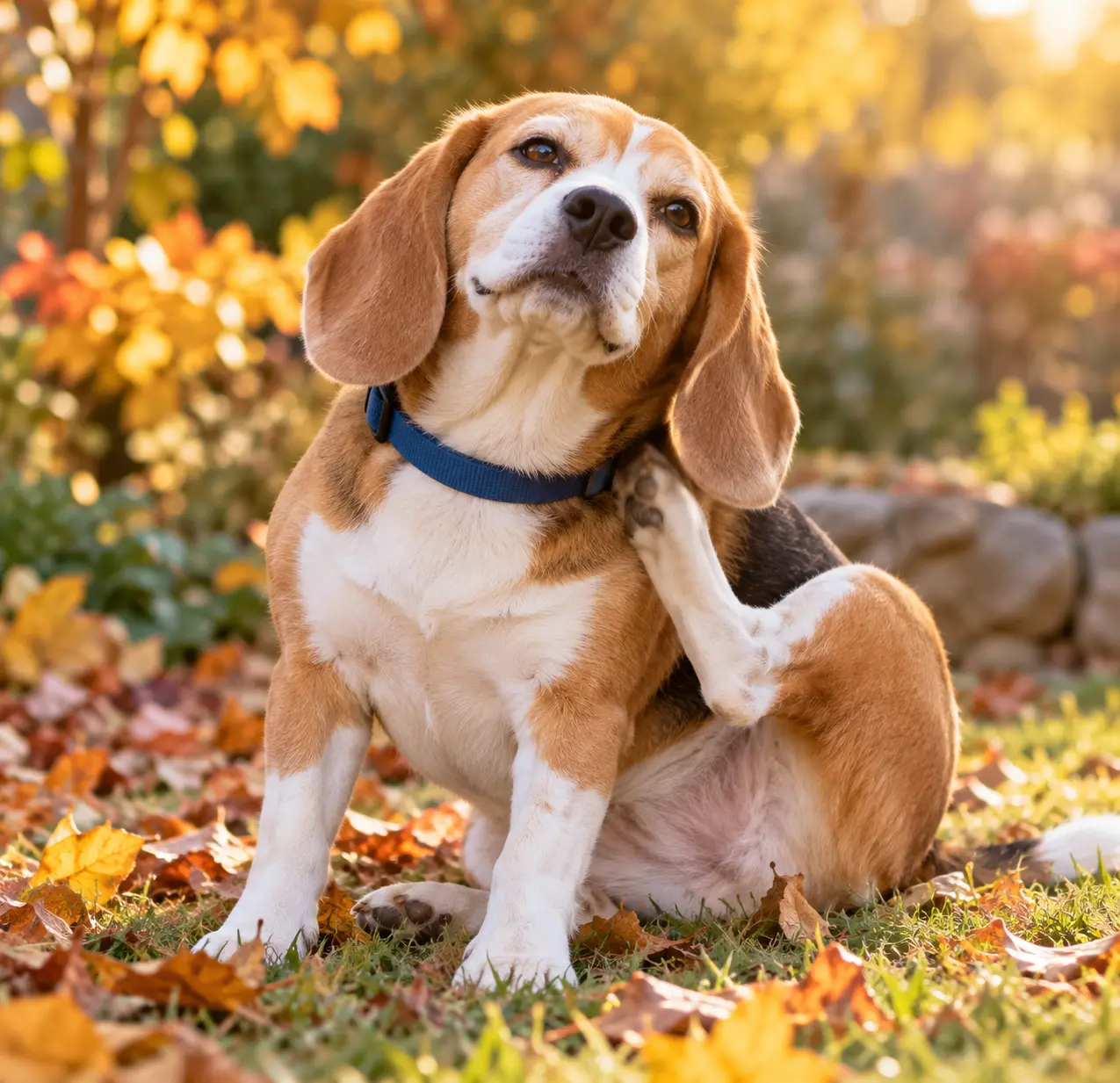
Yes, dogs can get seasonal allergies in the fall. As the weather turns, environmental allergens like pollen, mold, grass, and other outdoor irritants ramp up, and a sensitive dog reacts to them with itching, licking, sneezing, and irritated skin. If your dog gets noticeably itchier once autumn arrives, seasonal allergies are a likely suspect.
Every dog is different, though. Some breeze through fall with no trouble, while others struggle every year, and the same symptoms that point to allergies can also come from parasites, infections, or a food sensitivity. Here’s a guide to recognizing and easing seasonal allergies in dogs. Just keep in mind that when symptoms are persistent or severe, your veterinarian is the one who can give a professional diagnosis.
What Causes Fall Allergies in Dogs?
Fall allergies in dogs are usually a reaction to something in the environment. The season kicks up its own particular mix of allergens, and a dog can breathe them in or absorb them through the skin.
The usual culprits include:
- Pollen from late-season plants
- Grass
- Weeds
- Ragweed, one of the biggest fall offenders
- Mold and mold spores, which thrive in damp piles of leaves
- Fallen leaves and decaying vegetation
- Dust and other everyday environmental allergens
Ragweed deserves a special mention, since it blooms into the fall and its pollen travels for miles. It won’t poison your dog, but for an allergic one it’s a frequent trigger of the itching and sneezing that define the season.
Your dog doesn’t have to roll in a field to react, either. Allergens settle onto the coat and paws during an ordinary walk, then come inside with your dog and linger on bedding and floors, which keeps the exposure going long after the walk ends. A lot of fall allergy management comes down to interrupting that cycle.
What Are the Symptoms of Fall Allergies in Dogs?
The most common sign of seasonal allergies in dogs is itchy, irritated skin, which tends to show up as scratching, licking, and chewing rather than the sneezing people associate with their own hay fever. Dogs mostly react through their skin, so that’s where to look first.
Watch for:
- Excessive scratching
- Licking or chewing at the paws, often until they’re stained or raw
- Red, inflamed, or irritated skin
- Hair loss in spots where your dog has been scratching
- Ear irritation or recurring ear infections
- Sneezing
- Watery eyes
- Face rubbing against carpet or furniture
- A lot of licking in general, not only at the paws
- A changed or yeasty smell to the skin or coat
Not every dog shows every sign, and the picture ranges from a dog who scratches a bit more than usual to one who’s clearly miserable. Paws and ears are worth a close look, since those two spots flare up early and often. Any raw skin, a bad smell, or an ear that’s hot and gunky has usually crossed from simple itching into something a vet should see.
Why Is My Dog Itching More in the Fall?
If your dog gets itchier as fall sets in, rising seasonal allergens are a reasonable first guess. Ragweed, mold from wet leaves, and late-blooming weeds all peak in autumn, and a dog allergic to any of them will feel it.
Seasonal allergies aren’t the only thing that can make a dog itch, though. Fleas and other parasites cause intense itching and flare in some regions well into fall. Skin infections, both bacterial and yeast, bring their own itch and often ride along with allergies. Food allergies itch year-round rather than by season. Dry autumn air alone can leave skin flaky and uncomfortable. The timing is a clue, not proof, which is exactly why a dog who’s itching hard or breaking the skin deserves a vet’s eye rather than a guess.
How Can I Help My Dog With Fall Allergies?
You can’t scrub the pollen out of the season, but you can cut how much of it reaches and stays on your dog. The steps below reduce allergen exposure and ease everyday itching. None of them replace veterinary care for a dog who’s truly struggling, and they work best as a routine rather than a one-off.
Wipe Your Dog’s Paws After Walks
Paws pick up pollen, grass, and mold with every outing, then spread it around as your dog licks them and walks through the house. A quick wipe-down with a damp cloth or a pet-safe wipe after each walk clears off a surprising amount before it can irritate the skin or get tracked indoors. Give the belly and legs a pass too, since they brush through low growth.
Bathe and Groom Your Dog Regularly
Bathing rinses allergens off the coat and skin, and for an itchy dog it brings real relief. A gentle, dog-formulated shampoo is the safe default, and your vet can point you to a soothing one if your dog’s skin is sensitive. Brushing between baths pulls out trapped pollen and loose hair and lets you catch hot spots or irritation early. Go easy on the frequency, since over-bathing dries the skin and can make itching worse, so find the rhythm that keeps your dog comfortable without stripping the coat.
Wash Bedding and Frequently Used Items
Your dog’s bed is a reservoir for everything the coat brings in, and a dog who sleeps on a pollen-soaked bed keeps re-exposing themselves all night. Wash bedding, blankets, and any washable toys often through allergy season, in hot water where the care label allows. Crate liners and the throw your dog claims on the couch belong in that rotation too.
Keep Your Home Clean
Allergens settle out of the air and onto your floors and furniture, so regular cleaning lowers the background load your dog lives in. Vacuum carpets and upholstery often, ideally with a vacuum that has a HEPA filter, and wipe down hard floors where dust and pollen collect. An air purifier in the room where your dog spends the most time can help as well.
Reduce Exposure to Known Outdoor Triggers
If you’ve noticed what sets your dog off, plan around it. Pollen counts tend to run highest in the early morning and on dry, breezy days, so moving walks to later or to calmer, damper days can lighten the exposure. Steer clear of piles of damp leaves, which are mold factories, and keep your own lawn trimmed and raked so your yard isn’t its own trigger. None of this has to be perfect to help.
Can Grooming Help With Seasonal Allergies in Dogs?
Grooming does help, with one honest limit. Regular bathing and brushing physically remove pollen, dirt, dander, and other debris from your dog’s coat and paws, which lowers how much allergen sits against the skin and gets spread around your home. For a dog whose main problem is environmental exposure, a consistent grooming routine can take the edge off the itching.
The limit is that grooming manages exposure rather than treating the allergy underneath. It won’t cure the sensitivity or resolve a skin infection, and a dog with persistent or severe symptoms still needs a veterinary evaluation. Think of grooming as one useful layer of care, strongest when paired with your vet’s guidance rather than standing in for it.
Keeping up with coat care through allergy season is also where a professional can lighten your load. Looking for help keeping your dog’s coat clean during allergy season? Yourgi can connect you with pet grooming services in your area, backed by the Yourgi Guarantee.
When Should I Take My Dog to the Vet for Allergies?
Home care handles mild, occasional itching, but some signs mean it’s time for a professional. Book a veterinary visit if you notice:
- Itching that’s persistent, intense, or getting worse
- Open sores, scabs, or raw, broken skin
- Hair loss beyond a little thinning
- Repeated or ongoing ear problems
- A dog who seems uncomfortable or distracted by the itch
- Constant licking or chewing, especially at the paws
- Symptoms that don’t ease up once you’ve cut down on allergens at home
The thread tying those together is simple. When your dog is suffering, when the skin is damaged, or when basic management isn’t working, let a vet take it from there. Scratching that breaks the skin opens the door to infection, and the sooner that’s addressed the easier it is to resolve. There’s no need to tough it out or wait for the season to pass.
How Are Seasonal Allergies in Dogs Diagnosed?
Diagnosing allergies is partly a process of ruling things out. Because so many conditions share the same itchy symptoms, your vet starts by working through the possibilities, weighing your dog’s symptoms, history, and environment against other likely causes like parasites, infections, or a food allergy. When the itching flares matters too, so the time of year and how long it’s lasted both feed into the picture.
From there, the path depends on your dog. A vet might treat a secondary skin or ear infection first, trial a change to rule a food allergy in or out, or, when a seasonal allergy looks likely and keeps recurring, suggest allergy testing to identify specific triggers. The right approach varies with the situation, which is another reason a lasting itch is better handled in the exam room than guessed at online.
Fall Allergy Prevention Tips for Dogs
Here’s the season boiled down to a routine you can actually keep:
- Wipe your dog’s paws and undercarriage after every outdoor walk
- Keep the coat clean with regular, gentle bathing
- Wash bedding, blankets, and washable toys often
- Vacuum and dust your home frequently through allergy season
- Limit walks when pollen counts are high, and avoid damp leaf piles
- Keep your lawn and outdoor areas trimmed and raked
- Check your dog’s skin, paws, and ears regularly for early irritation
- Stay on top of grooming, at home or with a professional
- Talk to your veterinarian about any symptom that persists or worsens
If you work these into your fall routine, there’s a better chance that your dog will be more comfortable through the season, with fewer flare-ups to chase down later.
Frequently Asked Questions About Fall Allergies in Dogs
What are the signs of fall allergies in dogs?
The most common signs are itchy skin and the behaviors that come with it, including scratching, licking, and chewing, especially at the paws. You might also see red or irritated skin, hair loss where your dog scratches, recurring ear issues, sneezing, watery eyes, face rubbing, and a changed smell to the coat. Severity ranges widely from dog to dog.
What causes seasonal allergies in dogs?
Environmental allergens that peak in fall, mainly pollen, grass, weeds, ragweed, and mold from decaying leaves. A sensitive dog breathes these in or picks them up on the coat and paws outdoors, then reacts with itching and irritation. The allergens also come indoors and linger, which keeps the exposure going.
Why is my dog itching more in the fall?
Rising fall allergens like ragweed and leaf mold are a common reason, but they aren’t the only one. Fleas, skin or yeast infections, food allergies, and dry autumn air can all cause or add to itching. The seasonal timing is a hint rather than a certainty, so hard or persistent itching is worth a vet visit.
Can dogs be allergic to ragweed?
Yes. Ragweed is one of the most common fall allergy triggers for dogs. Its pollen is light, travels long distances, and lingers well into autumn, so a dog allergic to it can react even without ragweed growing nearby. The result is usually the familiar itching, licking, and skin irritation.
Can fall allergies cause dogs to lick their paws?
Very often, yes. Paw licking and chewing is one of the most recognizable allergy signs, partly because paws collect allergens directly off the ground on walks. Persistent licking can stain the fur and lead to raw skin or infection, so it’s worth wiping the paws after walks and checking them regularly.
Can grooming help dogs with seasonal allergies?
It helps by removing pollen, dander, and debris from the coat and skin, which lowers your dog’s allergen exposure and can ease itching. Grooming isn’t a treatment for the underlying allergy, though, so pair it with veterinary care when symptoms are persistent or severe.
How can I reduce allergens on my dog?
Wipe the paws and coat after walks, bathe with a gentle dog shampoo on a sensible schedule, brush regularly, and wash bedding often. Keeping your home clean with frequent vacuuming cuts the allergens your dog picks back up indoors. Together these steps meaningfully lower the load against the skin.
When should I take my dog to the vet for allergies?
Go when the itching is intense or worsening, when you see open sores, hair loss, or repeated ear trouble, when your dog is clearly uncomfortable, or when home care isn’t helping. Damaged skin and ongoing misery both warrant a professional, who can rule out other causes and set up the right plan.