
How Cold Is Too Cold for Dogs? Winter Prep Guide

Share


How to Prepare Your Dog for Colder Weather
Plenty of dogs love winter. The first snow sends some of them bounding around the yard like puppies again, and a brisk walk in cold air can be the highlight of a gray day. Cold weather still asks something of you as the owner, though, because the same conditions a husky shrugs off can leave a short-haired dog shivering and miserable. A little planning lets your dog enjoy the season safely.
If you’re wondering how cold is too cold for dogs, the honest answer is that no single temperature is safe or dangerous for every dog. Cold tolerance depends on the individual animal and the conditions outside, so the number on the thermometer only tells you part of the story.
How Cold Is Too Cold for Dogs? Start with Your Dog
There’s no universal cutoff, and any chart that promises one is oversimplifying. The same 30-degree morning that’s invigorating for a thick-coated northern breed can perhaps be risky for a tiny, thin-coated one. Rather than memorize a number, learn to read the factors that decide your own dog’s limit.
Several things play into how well a dog handles cold:
- Coat type. A dense double coat insulates far better than a single short coat. Breeds like huskies and malamutes are built for winter, while greyhounds, whippets, and most toy breeds feel the cold quickly.
- Body size. Small dogs lose heat faster than large ones, since they have more surface area relative to their mass.
- Age and health. Puppies, senior dogs, and those with conditions like arthritis, diabetes, or heart disease regulate temperature less reliably and often need more protection.
- Activity and acclimation. A dog moving steadily stays warmer than one standing still, and a dog used to the cold copes better than one who’s spent the season indoors.
- Wet and wind. Damp fur and a biting wind pull heat away fast, so a wet, windy 35 degrees can be harder on a dog than a dry, still 25.
As a rough guide, most healthy dogs are comfortable in cool weather, and many owners start paying closer attention as temperatures approach freezing. Cold becomes a real concern for a lot of dogs once it drops into the 20s Fahrenheit and below, and sensitive dogs feel it well before that. Treat those as general signposts, not rules, and let your dog’s behavior outside be your guide. If your dog has a medical or mobility condition, ask your veterinarian what cold-weather limits make sense for them specifically.
Make a Preseason Cold-Weather Checklist
The easiest time to get ready is before the first cold snap, not during it. A quick preseason pass means you’re not scrambling for a coat or a towel when the temperature drops overnight.
Start with the gear your dog wears every day. Check that collars and harnesses still fit over a thicker coat, inspect leashes for wear, and confirm ID tags are legible. Winter walks often happen in the dark, so add reflective gear or a light to your dog’s collar or leash while you’re at it.
Then set up the home side of things. Have a dry towel ready by the door for wiping down after walks, keep fresh water available, and arrange a warm resting spot away from drafts and cold floors.
Finally, think a step ahead. Glance at the season’s weather patterns, note which of your usual routes get icy or dark, make sure your emergency contacts are current, and have a backup care plan in mind for the days when getting out is hard.
Choose Winter Gear That Fits and Helps
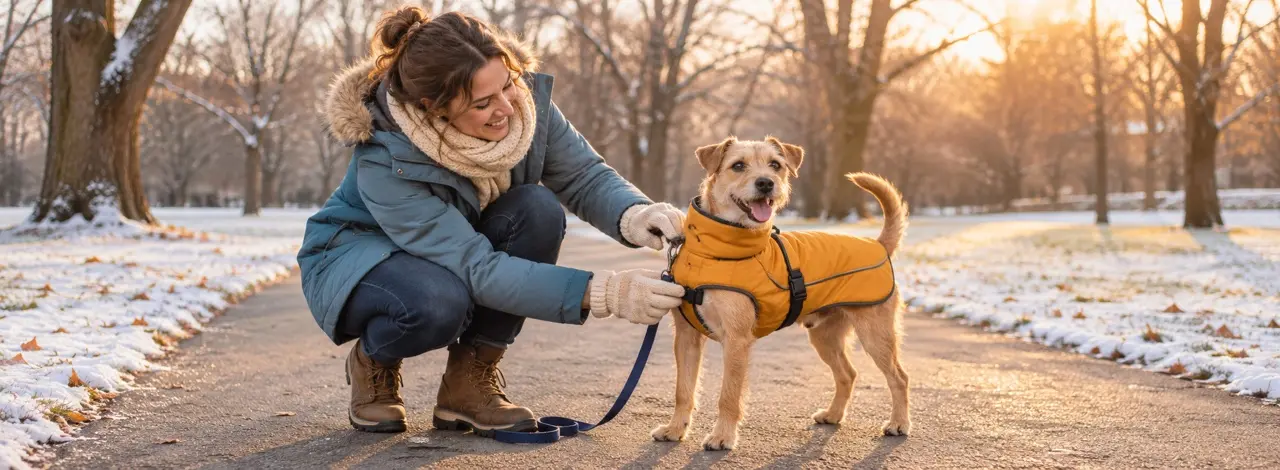
Not every dog needs to be bundled up, but for the ones who do, the right gear makes a genuine difference. A well-fitted coat or sweater can help a short-coated, small, older, or otherwise cold-sensitive dog hold onto body heat on a walk. A thick-coated breed, on the other hand, usually needs nothing and may overheat in a sweater, so match the gear to the dog rather than dressing every dog by default.
Fit is the whole game with winter gear. A coat should cover the back and belly without pinching at the legs or neck, and it shouldn’t restrict how your dog moves. Boots are the same, and most dogs need time to get used to them. Introduce boots indoors first, a few minutes at a time with treats, so the strange sensation becomes normal before you ask your dog to walk outside in them. Check anything your dog wears for rubbing or chafing, especially around the armpits and toes.
Two cautions. Visibility gear earns its place in the short daylight of winter, so a reflective coat or a clip-on light helps drivers see your dog. And gear is a supplement, not a fix. A coat doesn’t make it safe to stay out indefinitely, and a dressed dog should never be left unattended, since a snagged coat or boot can become a hazard.
Protect Paws from Ice and Deicing Products
Paws take the worst of winter. Between sharp ice, frozen ground, and the salt and chemical deicers spread on sidewalks, a dog’s pads face a lot in a single walk. A bit of care keeps them from cracking, burning, or worse.
Start with where you walk. Pick clear routes when you can, and watch for sharp ice, slick patches, and the white residue of ice-melt on treated pavement. If your dog needs extra protection, ask your veterinarian about a paw balm or protectant, and know that boots do double duty by blocking both salt and ice from direct contact with the pads.
The after-walk routine matters as much as the walk. Once you’re home, wipe or rinse your dog’s paws and the underside of their body, then dry them thoroughly, since deicing salts irritate the skin and tempt dogs to lick them off. While you’re down there, check the pads and the spaces between the toes for packed ice, redness, or cracks.
One more thing to lock down for the season: store antifreeze and ice-melt products where your dog can’t reach them. Antifreeze is sweet-tasting and highly toxic, so if you suspect your dog has swallowed any, treat it as an emergency and call your vet or a pet poison-control line right away.
Adapt Walks to Conditions and Behavior
Your summer walk routine doesn’t translate straight to January. When conditions turn harsh, shorter and more frequent outings usually beat one long trek, and a dog who normally does an hour may be happier with a few brisk fifteen-minute laps. Base the length on your dog and the day rather than a fixed clock, since a sensitive dog in a cold wind hits their limit far sooner than a hardy one on a still morning.
Safety on the ground changes in winter too. Keep your dog leashed around ice, deep snow, low visibility, and unfamiliar routes, where a loose dog can slip, bolt, or wander onto something dangerous. Steer well clear of frozen ponds and any surface you can’t vouch for, since ice that holds a person’s weight isn’t a sure thing and ice that looks solid often isn’t.
Above all, watch your dog and believe what you see. Reluctance to keep moving, lifting or favoring paws, shivering, whining, or a sudden dullness all say your dog has had enough. When you notice those signs, head indoors and reassess rather than pushing to finish the loop. If someone else walks your dog, give them clear instructions about acceptable routes, required gear, how to handle a change in the weather, and exactly when to cut a walk short and call you.
Keep Exercise and Enrichment Going Indoors
Some winter days simply aren’t fit for a real walk, and a dog with energy to burn and nowhere to put it tends to find trouble. Indoor activity bridges those stretches. Short training sessions sharpen the mind and tire a dog more than people expect, food puzzles turn a meal into a project, and a game of indoor fetch or tug burns off physical energy. Scent games, where you hide treats around a room for your dog to sniff out, tap into a natural drive and work surprisingly well in a small space.
Keep the limits in view, though. Indoor play supplements outdoor exercise, and for a high-energy or working breed it rarely replaces a real outing entirely. Adjust what you offer to your home’s space, your dog’s health, and their temperament, since a rambunctious young dog and a mellow senior want very different things. On the days you can’t get out and your dog needs more than you can give indoors, a trusted dog walker or a daycare day can keep the routine intact, as long as travel is safe and a provider is available.
Prepare the Home and an Emergency Plan
Winter readiness extends past the walk to the home itself. Give your dog warm, dry bedding set away from cold floors and drafts, and keep fresh water topped up, since dogs still need to drink well in cold, dry air. Then think through the season’s disruptions before they arrive. A power outage, a travel delay, or a storm can all affect your dog, so know where their medications are, keep a few days’ supply on hand, and have a pet-friendly place in mind to go if your home loses heat or becomes unsafe.
A couple of firm rules carry real weight in deep cold. Keep dogs indoors during extreme cold rather than leaving them outside or waiting in a parked car, which can turn dangerously cold fast. And make sure your dog’s ID tags and microchip details are current before winter storms hit, because snow and low visibility make a lost dog much harder to find and recover.
Know When to Stop and Call a Veterinarian
Cold exposure can tip from uncomfortable into a medical emergency, and knowing the warning signs lets you act before it gets serious. Watch for persistent shivering, weakness, unusual lethargy or confusion, skin that looks pale, gray, or oddly colored, and trouble walking or standing. Those can signal hypothermia or frostbite, both of which need prompt attention.
If you suspect either, move your dog to a warm, dry place and get veterinary advice quickly. Don’t try to manage it alone or wait to see if it passes. Skip the home remedies too, since applying direct heat or rubbing affected skin can cause further damage. Let a professional guide the next steps, and err on the side of calling sooner rather than later.
Quick Cold-Weather Preparation Checklist
Here’s the season boiled down to a run-through you can keep handy:
- Assess your dog’s individual cold sensitivity, and ask your vet about any health-specific concerns.
- Check the coat, boots, leash, ID, and visibility gear, and let your dog practice wearing anything new before a cold outing.
- Pick a safer route, decide in advance how you’ll shorten the walk, and tell any caregiver which changes mean they should call you.
- Set up paw cleaning by the door, warm dry bedding, a few indoor enrichment options, and an emergency backup plan.
Frequently Asked Questions
How can I tell if my dog is too cold on a walk?
Watch their body and behavior. Shivering, lifting or favoring paws, slowing down or refusing to go on, whining, hunching, or a sudden dullness all mean your dog has had enough. When you see those signs, head home and warm them up rather than finishing the planned route. A dog who’s genuinely cold will usually tell you well before it becomes dangerous, so trust what you’re seeing.
Does my dog need a winter coat or boots?
It depends on the dog. Short-coated, small, young, old, or cold-sensitive dogs often benefit from a well-fitted coat, and boots help protect paws from salt and ice. Thick-coated breeds usually need neither and may overheat in a sweater. Match the gear to your individual dog, make sure it fits without rubbing, and let them get used to boots indoors first.
How do I protect my dog’s paws from road salt?
Avoid heavily treated sidewalks when you can, and consider a paw balm or boots to block direct contact. After every walk, wipe or rinse the paws and dry them well, since salt irritates the skin and dogs often lick it off. Check between the toes for packed ice or cracks while you’re at it, and keep ice-melt products stored out of reach at home.
Should I change my dog’s food in winter?
Not automatically. A dog who’s much more active outdoors in winter may need slightly more food, while one who moves less in the cold may need a touch less to avoid gaining weight. Most dogs do fine on their usual diet. Before making any change, check with your vet, especially if your dog has a health condition or a weight to manage.
What should I do when ice or snow interrupts daily walks?
Lean on indoor activity to fill the gap. Short training sessions, food puzzles, indoor fetch, and scent games all burn energy and engage the mind. For a high-energy dog who needs more, a dog walker or daycare day can help once travel is safe. The goal is keeping some outlet going so a snowed-in day doesn’t leave your dog restless.
Can dogs get frostbite or hypothermia?
Yes, both are real risks in cold weather, especially for small, short-coated, young, old, or sick dogs, and in wet or windy conditions. Frostbite tends to hit the extremities like ears, tail, and paws, while hypothermia shows up as intense shivering, weakness, and lethargy. If you suspect either, move your dog somewhere warm and dry and call your vet promptly.
Is it safe to leave my dog in a car during cold weather?
No. A parked car holds the cold and can turn dangerously chilly fast, acting like a refrigerator in winter much as it becomes an oven in summer. Leave your dog at home where it’s warm rather than waiting in a cold car. In extreme cold, keeping dogs indoors altogether is the safest choice.